What Is Feng Shui, Really? A No-Nonsense Guide for Singaporeans
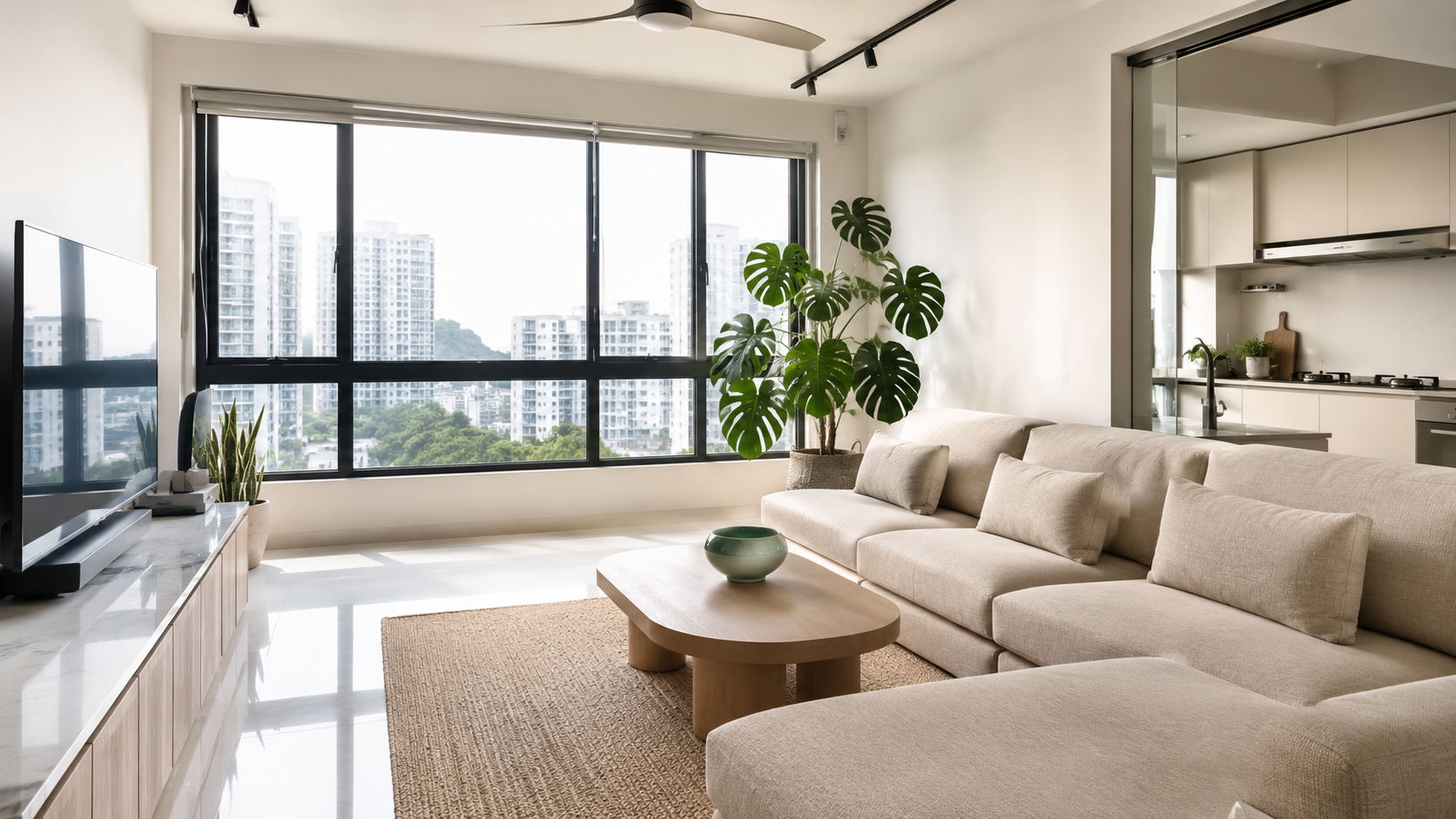
You've probably walked into a friend's flat and noticed a little three-legged toad near the door, or a laughing Buddha on the TV console. "Feng shui," they say. And you nod — even if, honestly, you're not entirely sure what that means.
Here's the thing: neither are most people.
Feng shui has been practised for thousands of years, yet it's routinely misrepresented — reduced to ornaments, colour charts, and superstition. This guide cuts through the noise. Whether you're a sceptic, a curious beginner, or someone about to renovate their HDB, here's what feng shui actually is.
Feng Shui Is Not What Most People Think
Let's start with what feng shui is not.
It is not a collection of lucky trinkets. It is not a religion. It is not the same as Chinese interior decorating. And it is absolutely not about buying a certain statue and placing it in a specific corner of your living room.
The words themselves tell you more: feng (風) means wind, shui (水) means water. Together, they refer to the natural forces that move through an environment — invisible, but felt. The practice is rooted in Taoist philosophy and the observation that our surroundings profoundly affect how we think, feel, and function.
In that sense, feng shui is less about objects and more about conditions. It asks: how does energy move through this space? Where does it stagnate? Where does it rush past too quickly? And what can we do — through layout, light, and form — to bring things into balance?
The Core Concept: Qi, Flow, and Space
Central to feng shui is the concept of Qi (氣, pronounced chee) — the life-force energy that flows through all living things and environments. In feng shui, the goal is to allow Qi to circulate freely and gently through your home, the way a breeze moves through a well-designed room.
When Qi flows well, the theory goes, the people living in that space tend to feel more settled, focused, and at ease. When it's blocked — by clutter, poor layout, or harsh angles — that stagnation can show up as fatigue, tension, or a persistent sense that something feels off.
Three other key ideas sit alongside Qi:
The Bagua is an energy map that divides a space into eight zones, each corresponding to a different area of life — wealth, relationships, health, career, and so on. Practitioners use it to assess which parts of your home may need attention.
The Five Elements — Wood, Fire, Earth, Metal, and Water — describe different qualities of energy. A well-balanced space ideally incorporates all five, not necessarily as literal materials, but as shapes, colours, and textures that evoke each element's character.
Yin and Yang represent the balance between stillness and activity, softness and structure. A bedroom that leans too yang (bright, angular, stimulating) can disrupt sleep. A living room that's too yin (dark, heavy, closed) can feel oppressive.
None of this requires belief in the supernatural. At its core, feng shui is a framework for paying close attention to how a space feels — and then adjusting it intentionally.
How Feng Shui Applies to a Modern Singapore Home
Singapore presents some interesting feng shui challenges. HDB flats are compact, often rectangular, and sometimes face directions that — according to classical feng shui — aren't ideal for every resident. Condominiums may have long corridors, units that open directly into a kitchen, or windows that face a neighbouring block at close range.
But none of these are deal-breakers. Feng shui has always been an adaptive practice. Here's how some of its principles translate practically into a Singaporean home:
Declutter first, always. Stagnant Qi loves clutter. Before any other adjustment, clearing physical mess is the single most impactful thing you can do — and it costs nothing.
Let light in. Natural light is considered yang energy, vital and activating. Heavy curtains that block morning light, or dark corners that never see daylight, tend to create spaces that feel heavier than they need to.
Mind the entrance. The main door is where Qi enters your home. Ideally, it should open fully, be well-lit, and feel welcoming — not obstructed by a shoe rack or blocked by a wall directly opposite.
Bedroom positioning matters. Classical feng shui recommends a "command position" for the bed: where you can see the door without being directly in line with it. It sounds simple, but it creates a subtle sense of security that genuinely affects sleep quality.
Facing direction (your Kua number). This is where it gets personalised — and why a consultation can be useful. Everyone has favourable and unfavourable directions based on their birth year and gender. (More on this in our next post on facing directions.)
Common Feng Shui Myths — Debunked
"I need to buy feng shui products." No. Classical feng shui doesn't require any purchases. Adjustments are primarily about space, direction, light, and form. Objects are secondary — and often irrelevant.
"Feng shui is only for Chinese people." The principles of Qi flow and spatial balance aren't ethnically exclusive. Feng shui has been practised across Asia for centuries, and its core ideas — that environment affects wellbeing — are universal.
"My flat faces the wrong direction, so feng shui can't help me." Direction is one factor among many. A skilled practitioner looks at the whole picture: the occupants' personal energies, the layout, the timing of the move, and more. Rarely is a situation beyond adjustment.
"It's all just superstition." This is where reasonable people disagree — and that's okay. What's hard to argue with is the underlying premise: that a calmer, better-organised, more light-filled space tends to make people feel better. Whether you call that feng shui or good design is largely a matter of framing
Is Feng Shui Worth Trying? Here's an Honest Take
If you're expecting feng shui to solve your problems through ornaments and lucky numbers, you'll likely be disappointed.
But if you approach it as a structured way to examine your home — how it's laid out, how energy and light move through it, whether it supports the life you're trying to live — then yes, it's worth exploring. Many of its recommendations overlap significantly with what interior designers, sleep researchers, and environmental psychologists have arrived at independently.
The most credible practitioners aren't selling you trinkets. They're asking detailed questions about your life, your home's orientation, and your goals — then offering specific, practical adjustments rooted in classical texts.
Feng shui, at its best, is simply the art of living in a space that works with you, not against you.