Feng Shui Small Spaces: Studio & 2-Room HDB Guide
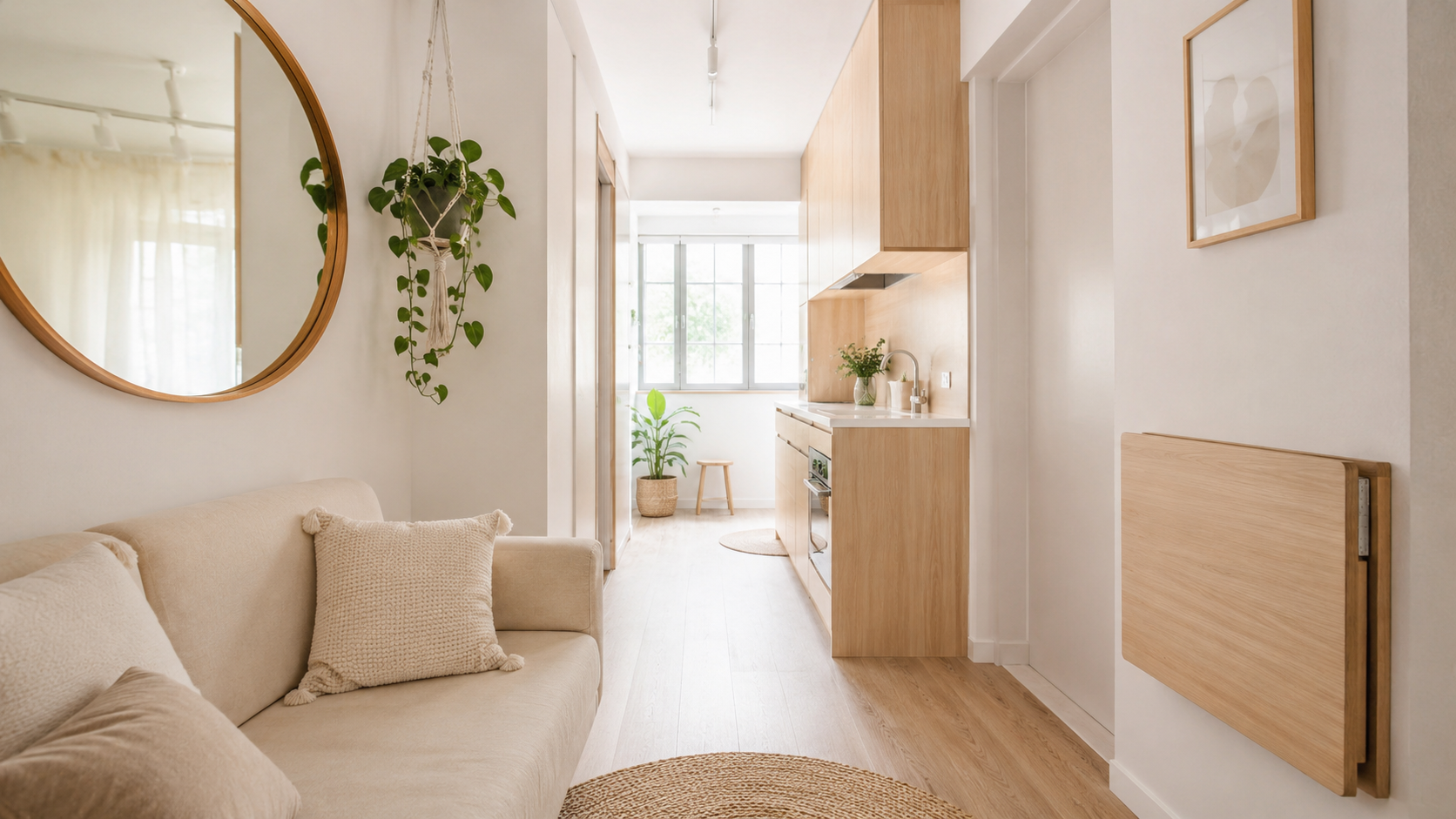
There's a common misconception that feng shui is a luxury — something you do when you have a sprawling five-room flat with a dedicated study, a feature wall, and a separate dining room to worry about. If you're in a studio or a 2-room HDB, the thinking goes, there's simply not enough space to work with.
In reality, the opposite is true.
Small spaces are where feng shui earns its keep. When every square metre matters, every placement decision carries more weight. A chair in the wrong position doesn't just look awkward — it actively disrupts how energy moves through your entire home. A badly placed mirror doesn't just reflect the wrong thing — it amplifies it. In a compact home, the margin for error is smaller, and the rewards for getting it right are immediately felt.
Here's how to make feng shui work in a studio apartment or 2-room HDB — without a renovation budget and without pretending you have space you don't.
Why Small Spaces Need Feng Shui More, Not Less
Feng shui is fundamentally about the flow of qi — life energy — through a space. In larger homes, poor qi flow might mean one room feels flat or one corner gets ignored. In a small home, blocked or stagnant qi has nowhere to go. It pools. The whole space feels heavy, airless, or somehow draining — even after you've cleaned it.
This is something many people in Singapore know intuitively but can't name. You come home from work, and instead of feeling restored, the flat makes you feel more tired. You tidy up, but it still feels cluttered. You open the windows, and it still doesn't quite breathe.
That's a qi problem. And it's solvable.
The good news is that the most effective feng shui principles — light, flow, intentional placement, and the elimination of stagnation — are also the most practical. You don't need to knock down walls or buy new furniture. You need to understand what's working against you and address it deliberately.
Mirrors: Your Most Powerful Tool
In a small space, a well-placed mirror is worth more than almost any other feng shui adjustment. Mirrors expand perceived space, double natural light, and — when used correctly — keep qi moving through a room rather than hitting a wall and going flat.
The key word is correctly. Mirrors are amplifiers. They double whatever they reflect, energetically and visually. That's a gift when they're reflecting light, greenery, or an open view. It's a problem when they're facing a cluttered corner, a bathroom door, or — one of the most common mistakes in small HDB layouts — directly facing the main entrance.
A mirror facing your front door pushes incoming qi right back out before it has a chance to settle in your home. In feng shui terms, this is like leaving money on the doorstep and wondering why you never seem to have enough.
Practical placements for small spaces:
Beside the entrance, not opposite it. Position a mirror on the wall adjacent to your main door. It welcomes qi in and circulates it, rather than deflecting it.
On a wall that reflects your window. If you have a single window — common in 2-room HDBs — a large mirror on the perpendicular wall effectively doubles your natural light and creates visual depth.
Round or oval frames over rectangular ones. In compact spaces, circular mirrors soften the sharp angles that small rooms tend to accumulate. They also align more harmoniously with feng shui principles around smooth, uninterrupted energy flow.
One large mirror, well-placed, beats three small ones in three random spots every time.
Plants in a Compact Home — The Right Choices
Plants bring wood energy into a space — growth, vitality, and upward movement. In a home that might otherwise feel static or contained, even a single healthy plant changes the energetic quality of a room.
The challenge in small spaces is that not all plants are equally suited to compact, often low-light HDB environments. Some grow too large and start competing with you for the room. Others — despite popular styling advice — carry feng shui associations that work against the restful, prosperous energy you're trying to cultivate.
Plants that work well in small HDB spaces:
Pothos and heartleaf philodendrons — trailing plants that can be hung at height, keeping floor space clear while adding greenery and life. They're highly tolerant of indirect light and easy to maintain.
Snake plants (Sansevieria) — upright, architectural, and one of the best air-purifying plants available. Excellent in a narrow corridor or beside a work-from-home corner.
Lucky bamboo — a feng shui classic for good reason. It grows vertically, takes up almost no floor space, and thrives in a small glass of water on a desk or shelf.
What to avoid: Cacti and plants with very pointed or spiky leaves introduce sha qi (sharp, cutting energy) into a space. In a large garden, this can be managed. In a 300 sq ft studio, you're essentially living inside it. Save the succulents for the office.
One practical rule: any plant in your home should be alive and visibly thriving. A struggling or dying plant does more energetic damage than no plant at all. If something isn't surviving your light conditions, swap it out without guilt.
Multi-Function Furniture and Flow
In a 2-room HDB, your dining table might also be your work desk, your reading nook might double as a guest bed, and your "living room" might be the strip of floor between the sofa and the TV unit. This isn't a feng shui problem to solve — it's a reality to work with.
The feng shui principle that matters most here is flow: can you move through your space without obstruction? Is there a clear, unimpeded path from your entrance through the main living area? Can energy — and you — circulate freely, or does the furniture create dead ends and bottlenecks?
Small space furniture principles through a feng shui lens:
Leave the centre of your room clear. This is the heart of the home — the space through which qi travels to reach every other area. Furniture pushed against walls with an open centre feels more spacious and allows energy to circulate. Avoid placing a large coffee table or ottoman dead centre if it makes movement feel cramped.
Raise things off the floor where possible. Floor-level clutter — stacked boxes, shoes left out, bags dropped at the entrance — is one of the fastest ways to create stagnant energy at the base of a space. Wall-mounted shelving, hooks near the door, and furniture with legs all help qi move underneath and around objects rather than accumulating behind them.
Fold-out and extendable furniture is a genuine feng shui solution. A dining table that folds against the wall when not in use isn't just space-saving — it's actively beneficial. It means the space can shift and breathe, rather than being permanently defined by furniture arranged for functions you're not always performing.
Decluttering as a Feng Shui Practice
In Western organisation culture, decluttering is often framed around aesthetics or productivity. In feng shui, it's something more fundamental: clutter is stagnant energy, full stop. Every item you're holding onto "just in case," every surface covered with things that have no designated home, every drawer too full to close properly — these are places where qi stops moving.
In a small space, the effect is amplified. You can't afford a junk room. The clutter you're ignoring is sharing your living space, your sleeping space, and your work space with you.
This doesn't mean your home must be minimalist or cold. Feng shui has nothing against personal objects, collections, or warmth. What it asks is that every item you keep is either useful, beautiful, or meaningful — and that it has a place where it lives.
A practical starting point: Walk through your home and identify the three spots where things most often accumulate without being put away. These will almost always correspond to areas where the energy in your home feels most stuck. Address those three spots first, and you'll notice the shift before you've touched anything else.
For small HDB homes, common stagnation points are: the entrance (shoes, bags, mail that never gets sorted), the space under the bed (particularly significant in feng shui as it affects sleep and health), and the corner furthest from the front door — which, in a compact layout, often becomes an invisible dumping zone.
Putting It Together
You don't need to do all of this at once. The most effective approach in a small space is to pick one area of concern — perhaps you're not sleeping well, or the flat never quite feels settled despite being tidy — and address the feng shui principles most relevant to that experience.
Start with decluttering the entrance and clearing the path from your front door. Add one well-placed mirror and one thriving plant. Create flow in your main living area. These four changes alone will noticeably shift how your home feels — and cost almost nothing.
Small spaces aren't a feng shui limitation. They're an opportunity to get very precise, very intentional, and see real results quickly.
Even in a small space, feng shui works. Ask us how!