How to Activate the Wealth Corner in Your Singapore Home
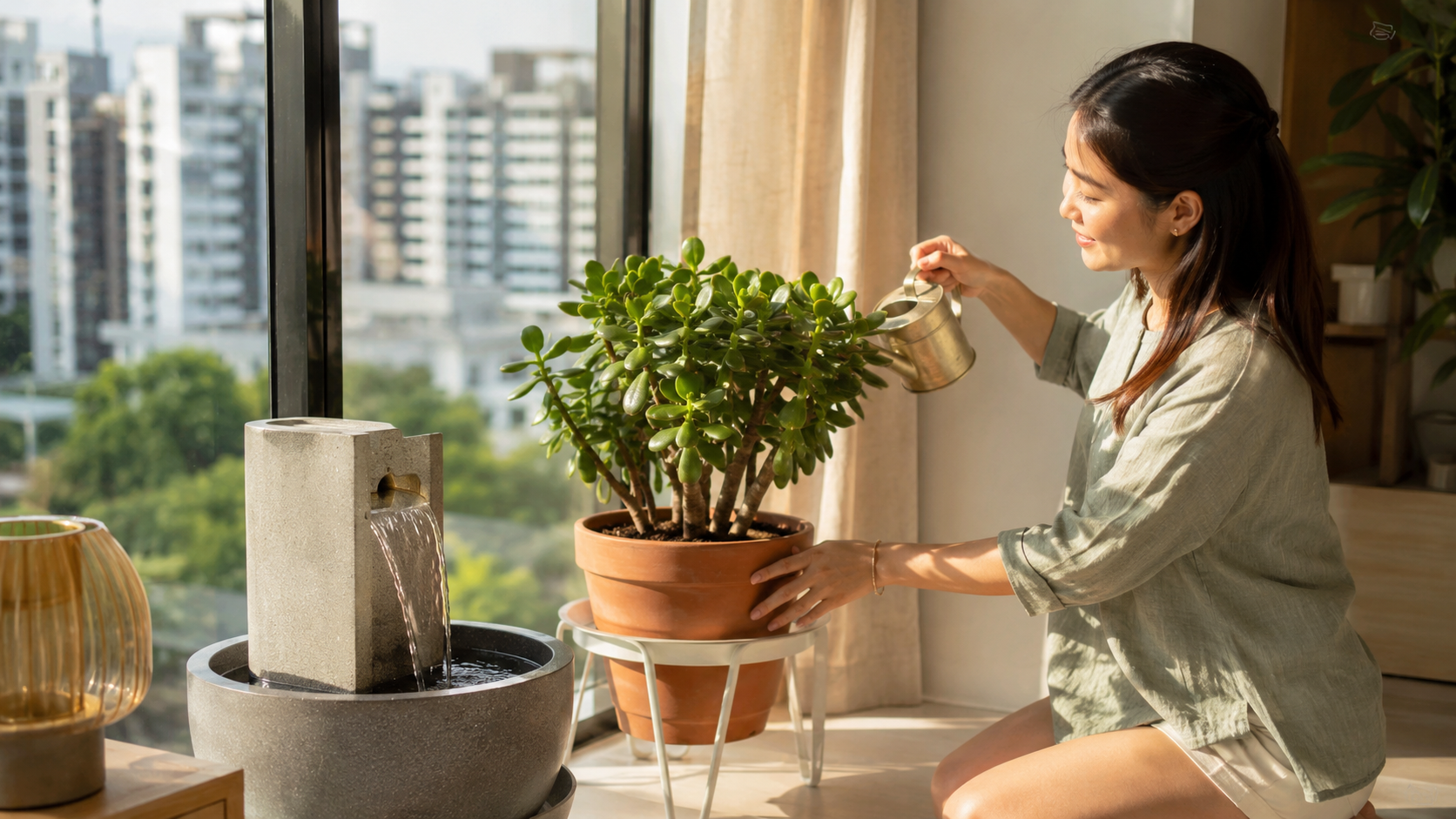
Everyone wants their home to feel abundant. But for most people, "feng shui for wealth" conjures images of golden laughing Buddhas and plastic lucky cats lined up on a shelf — and that's exactly why they never bother.
The reality is far more considered. Classical feng shui identifies specific zones in your home that govern financial energy, and activating them has more to do with light, living things, and thoughtful placement than with any ornament you can pick up at a night market. This guide walks you through exactly how to locate your home's wealth corner and bring it to life — quietly, beautifully, and in a way that actually fits a modern Singapore home.
Where Is the Wealth Corner in Feng Shui?
In the Bagua map — the eight-sided grid used in feng shui to overlay energy zones onto a floor plan — the wealth and prosperity sector sits in the southeast. This is sometimes called Xun in classical Chinese feng shui, and it governs not just material wealth but the flow of abundance in all its forms: income, opportunity, and resources.
When feng shui practitioners talk about the "wealth corner," they typically mean two things:
The southeast sector of your entire home, mapped from its centre
The far left corner of any individual room, as you stand at the doorway looking in — a method drawn from the Black Hat Tantric Buddhist (BTB) school of feng shui
Both approaches are valid, and many practitioners use them in tandem. For Singapore homes — where floor plans can be irregular, and HDB layouts don't always cooperate — working with both gives you more flexibility.
The southeast is associated with the Wood element. That matters, because it tells you exactly what kinds of activations will work best here.
How to Locate Your Prosperity Zone at Home
You don't need a compass or a consultant to find your southeast sector — though a compass certainly helps for precision. Here's a simple method:
Stand at the centre of your home. If you're in a smaller flat, the centre of your living area works well.
Use your phone's compass app to identify which direction is southeast (roughly 112.5° to 157.5° on a compass bearing).
Mark that zone. In most Singapore condos and HDB flats, this will land somewhere in or near the living room, a bedroom, or a study — which is fortunate, as these are spaces you can actually style intentionally.
Once you've identified the sector, take stock of what's currently there. A cluttered corner, a storeroom, or — the worst case in feng shui terms — a toilet, will suppress the energy of the zone.
For a well-functioning living room layout that supports this kind of intentional zoning, see our guide on [feng shui principles for the living room].
Plants That Activate Wealth Energy
Because the southeast is governed by Wood, living plants are one of the most effective and elegant activations you can use. They literally embody the element — growing, reaching upward, and cycling energy through a space in a way that no crystal or figurine can replicate.
The best feng shui plants for wealth in this corner are ones that are round-leaved, lush, and healthy. Sharp, spiky, or dry plants work against you here.
Top choices for Singapore homes:
Jade Plant (Crassula ovata) — Round, coin-shaped leaves make this the classic wealth plant. It's low-maintenance, thrives in Singapore's humidity, and grows slowly and steadily — a good metaphor for sustainable wealth. Place it where it gets indirect morning light.
Pothos (Epipremnum aureum) — Known locally as money plant, and for good reason. Its trailing, heart-shaped leaves are deeply associated with financial flow. Grows readily in most Singapore flats, even with limited natural light.
Chinese Money Plant (Pilea peperomioides) — Round, flat leaves on upright stems. One of the most visually refined choices if you want something that also looks contemporary.
Peace Lily — If your southeast sector doesn't get much light, the peace lily thrives in shade while keeping the Wood energy active.
One important rule: keep your wealth-corner plants healthy. A yellowing, root-bound, or neglected plant doesn't activate energy — it signals stagnation. If you're not confident with plants, start with pothos. It's genuinely very hard to kill.
Water Features — Which Ones Work and Where
Water and Wood have a generative relationship in the five-element cycle: water feeds wood, helping it grow. This means that introducing a water element near — but not overwhelming — your wealth corner can give it a meaningful boost.
In a Singapore home, the most practical options are:
Tabletop fountains work exceptionally well. A small recirculating fountain placed just beside or in front of your southeast plant creates movement, sound, and moisture — all of which stimulate energy flow. Choose one in natural stone, ceramic, or bamboo over plastic or overly ornate finishes.
Placement matters more than size. The water feature should be to the left or in front of your plants as you face the corner — not behind them. In feng shui terms, water in front represents incoming wealth; water behind can symbolise it draining away.
What about aquariums? Yes — a small, well-maintained fish tank in the southeast is considered highly auspicious. Nine fish is a traditional number (eight gold, one black). However, an aquarium requires consistent upkeep, and a dirty or neglected one is actively inauspicious. Only go this route if you'll genuinely maintain it.
Running water and natural light together create what feng shui practitioners describe as a "living" corner — one that draws and circulates qi rather than allowing it to stagnate. In Singapore's bright climate, if your southeast corner catches afternoon sun, you have a genuine advantage here.
For those working from home, this same water-and-wood principle can be applied to your home office.
What NOT to Put in Your Wealth Corner
Knowing what to avoid is just as useful as knowing what to add. A few things that commonly suppress the southeast sector:
Clutter. The single biggest wealth-corner mistake. Stacked boxes, a forgotten exercise bike, or piled-up shopping bags block the flow of qi more effectively than almost anything else. Before you add a single plant or fountain, clear the space completely.
Sharp or metallic objects. Metal weakens Wood in the five-element cycle. Avoid filing cabinets, large metal sculptures, or anything with aggressive angles placed directly in this corner. That includes certain gym equipment and steel shelving.
Dying or artificial plants. Fake plants are inert — they don't carry Wood energy. Dying ones actively signal decline. Neither belongs in your prosperity zone.
Electronics as the dominant feature. A TV, router, or tangle of cables makes this corner about distraction and static rather than growth. If electronics are unavoidable here, balance them with a healthy plant placed between the device and the rest of the room.
Too much Fire element. Candles, red décor, and bright warm lighting in excess can burn through Wood energy rather than nurturing it. Soft, warm ambient light is fine — just don't turn the wealth corner into a shrine of flames.
Toilets and drains. If a toilet or floor drain sits in your southeast sector, the conventional remedy is to keep the toilet lid down at all times, use a red rug or mat in front of it, and keep the space especially clean. An alternative is to activate a secondary wealth zone elsewhere in your home — something a consultant can help you identify.
A Corner Worth Coming Back To
The wealth corner doesn't require grand gestures. A healthy jade plant, a small recirculating fountain, clean open space, and good natural light — that's genuinely all it takes to create a southeast sector that's working for you rather than sitting dormant.
What makes the difference between an average activation and a truly effective one is precision: understanding your home's exact compass orientation, identifying which zones overlap with which rooms, and making recommendations that fit your specific layout rather than generic advice.
Let us map your wealth sectors and recommend personalised activations. Book a Home Consultation.